L.I To show how to use place value and one for ten and ten for one.
Today I made a presentation on place value and the strategy one for ten and ten for one. One for ten and ten for one is a very useful strategy for place value even when you are stuck. It's easy to use too. I made a presentation on how to use it and what place value is.
I learned by making a presentation and showing people how to use one for ten and ten for one along with what place value is.
Showing posts with label Maths. Show all posts
Showing posts with label Maths. Show all posts
Tuesday, 20 March 2018

Thursday, 15 March 2018
Strategies
L.I Addition and subtraction are inversely related.
Today I did my maths which was to make different strategies on how to answer a math question. We had to use Lukah's or Mr O's strategy four the questions, also a number line. We first discussed how to do Lukah's strategy and Mr O's strategy properly.
I learned by discussing on how to use Lukah's strategy and Mr O's strategy.

Today I did my maths which was to make different strategies on how to answer a math question. We had to use Lukah's or Mr O's strategy four the questions, also a number line. We first discussed how to do Lukah's strategy and Mr O's strategy properly.
I learned by discussing on how to use Lukah's strategy and Mr O's strategy.

Tuesday, 6 March 2018
Maths Problem
L.I To make a DLO about rounding numbers up to the nearest ten.
Today I made a DLO about rounding numbers up to the nearest ten. We also learned that you can use this maths technique to solve a question. For example 9+6, to solve this questions I have to round up the nine to ten. So I have to borrow one number from six to give to nine so it can become 10. Leaving the six with five. Now that we have ten and five we have to add them together and we got the answer.
I learned by making a google draw then looking at the questions I had to answer by using the technique round it up to the nearest ten.

Today I made a DLO about rounding numbers up to the nearest ten. We also learned that you can use this maths technique to solve a question. For example 9+6, to solve this questions I have to round up the nine to ten. So I have to borrow one number from six to give to nine so it can become 10. Leaving the six with five. Now that we have ten and five we have to add them together and we got the answer.
I learned by making a google draw then looking at the questions I had to answer by using the technique round it up to the nearest ten.

Wednesday, 28 February 2018
Five Ways To Solve A Question
L.I To make a google draw and make five ways to solve a math question.

Today I did my maths work which was to show how you can solve a question in five ways. We first did this on the white board with Mr O then doing it on the computer. We had to explain and show how to do the strategies.
I learned by making a google draw then explaining and showing how do to the five ways on solving a math question.

Thursday, 22 February 2018
Blog Graph
L.I To do a blog graph about the blogs I did in 2017.
Today I did my maths work witch was a graph about how much blogs post I did in 2017. Once I've written down all the months that I've done blog posts in, I had to make the graph with the labels and the title.
I learned by making a google sheet and then writing down the amount of blog posts I did in the months, then making the graph with the title and the labels.

Today I did my maths work witch was a graph about how much blogs post I did in 2017. Once I've written down all the months that I've done blog posts in, I had to make the graph with the labels and the title.
I learned by making a google sheet and then writing down the amount of blog posts I did in the months, then making the graph with the title and the labels.

Tuesday, 12 December 2017
Prototec
LI: To develop instant recall of addition facts.
Today for my maths I played a game called prototec. Prototec is a math game where you pick a stage and solve math questions on there. The higher you go the harder it gets. Once you have finished all the questions you go to the bottom and then press mark, when you marked it, it will make sure you got your questions correct. If you didn't get all the questions questions correct then it will cross out your answer and put the right answer on. The stages I did was stage 5, 4, and 3-2. In stage five it was hard. The questions that was challenging for me in stage five was the the division questions. In stage four I got confused with grouping within 10&20. In stage 2-3 it was pretty easy and nothing was hard and confusing. Year 4's was allowed to do any stage, year 5's had to do stage 4 or higher, year 6's had to do stage 5 or higher.
I learned by going and searching up prototec and then choosing a stage. I chose stage 5 then 4 and then 2-3.


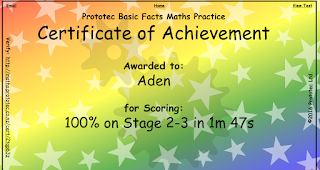
Today for my maths I played a game called prototec. Prototec is a math game where you pick a stage and solve math questions on there. The higher you go the harder it gets. Once you have finished all the questions you go to the bottom and then press mark, when you marked it, it will make sure you got your questions correct. If you didn't get all the questions questions correct then it will cross out your answer and put the right answer on. The stages I did was stage 5, 4, and 3-2. In stage five it was hard. The questions that was challenging for me in stage five was the the division questions. In stage four I got confused with grouping within 10&20. In stage 2-3 it was pretty easy and nothing was hard and confusing. Year 4's was allowed to do any stage, year 5's had to do stage 4 or higher, year 6's had to do stage 5 or higher.
I learned by going and searching up prototec and then choosing a stage. I chose stage 5 then 4 and then 2-3.


Friday, 1 December 2017
Four Questions
Conduct investigations using the statistical enquiry cycle: posing and answering questions; gathering, sorting, and displaying category and whole-number data; communicating findings based on the data.
Today for my maths I did a google drawing with four questions on it. I did this piece of work with a buddy so we can finish the work together and quicker. We had to use images to make sure the questions make sense for the people that reads it.
I learned by working with a buddy and creating a google draw with images to make sure if the questions actually makes sense.


Tuesday, 7 November 2017
Choice Squares Graph
LI: To Conduct investigations using the statistical enquiry cycle: posing and answering questions; gathering, sorting, and displaying category and whole-number data; communicating findings based on the data.
Today for my maths I did the choice squares. For my choice squares I did on my maths book, known as quad book. For this graph I had to make an axes. An axes is where you have one line going down then the other going to the side. Once I did that I did the title, labels then I got the paper where I asked everyone what their favorite fruit was, also asking the choices they had. I cut out the strips of the fruits and glued it on my book. I had to make sure I had the same amount of fruits as the numbers I had on my axes.
I learned by making sure I cut out the paper correctly also making sure I had enough room for the labels and naming the fruits. Along with measure it correctly.


Today for my maths I did the choice squares. For my choice squares I did on my maths book, known as quad book. For this graph I had to make an axes. An axes is where you have one line going down then the other going to the side. Once I did that I did the title, labels then I got the paper where I asked everyone what their favorite fruit was, also asking the choices they had. I cut out the strips of the fruits and glued it on my book. I had to make sure I had the same amount of fruits as the numbers I had on my axes.
I learned by making sure I cut out the paper correctly also making sure I had enough room for the labels and naming the fruits. Along with measure it correctly.


Friday, 3 November 2017
Choice Squares
LI: To conduct investigations using the statistical enquiry cycle posing and answering questions gathering sorting and displaying category and whole-number data communicating based on the data.
Today for my maths I did choice squares. Choice squares is wheres there is a pie chart a strip graph and a stem and leaf graph, about fruits! I got a piece of paper and asked people what their favorite fruit was. I also had to say the choices that they had to choose from.
I learned by asking people their favorite fruit in work space 1 and 2.


Today for my maths I did choice squares. Choice squares is wheres there is a pie chart a strip graph and a stem and leaf graph, about fruits! I got a piece of paper and asked people what their favorite fruit was. I also had to say the choices that they had to choose from.
I learned by asking people their favorite fruit in work space 1 and 2.


Friday, 27 October 2017
Graphs
LI: To investigate a range of addition and subtraction strategies.
Today I for my maths I did graphs. One of the graphs was a bar graph and the other was a line graph. I also had to do the title which was "Number Rolled On A Pair Of Dice" and also the labels which only was two. The two labels was "Number Of Times Rolled" and the other "Total Of Rolled Dice."
I learned by getting help from what was on the white board and also making sure the lines were straight by using the ruler.


Monday, 18 September 2017
Maths Plan
LI: To create a piece of art using: rotation, translation, and reflection.
Today I did a maths plan on a design that we are going to do later on. We did this as a group, we first got some New Zealand designs then we got some other designs. This work was really fun to do as we also had a google doc to put in one of the pictures chosen from the drawing.
I learned by getting one person from our group to share the drawing with us so we can put the photos in. then putting a picture in one of the boxes on the doc chosen from our drawing.


Today I did a maths plan on a design that we are going to do later on. We did this as a group, we first got some New Zealand designs then we got some other designs. This work was really fun to do as we also had a google doc to put in one of the pictures chosen from the drawing.
I learned by getting one person from our group to share the drawing with us so we can put the photos in. then putting a picture in one of the boxes on the doc chosen from our drawing.


Tuesday, 12 September 2017
R.R.T
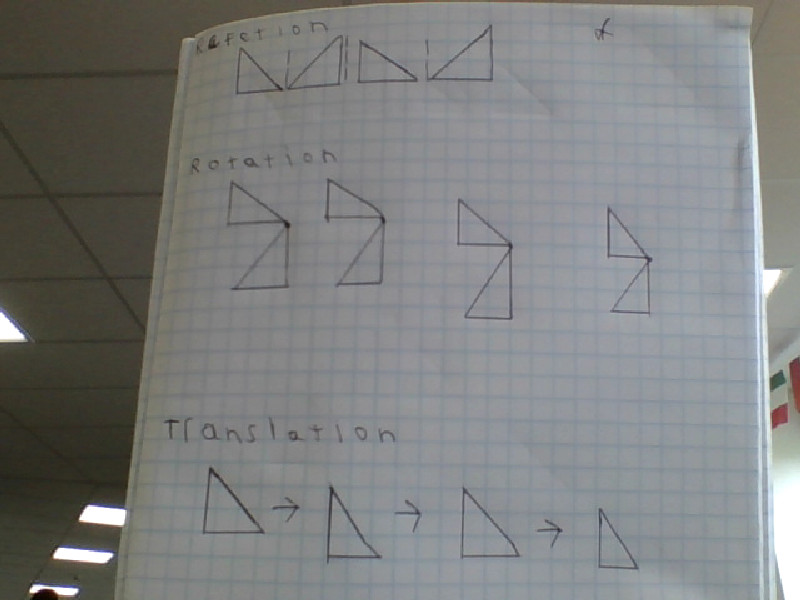
LI: Reflection, Rotation and Translation or Flip Slide Turn
Today I did reflection, rotation and translation for my maths. Reflection is when you have a reflection of yourself but backwards, if you have writing on your shirt then it will also be backwards. Rotation is when you have yourself or a object turn from the normal position to the side position, then the upside down position then again the side position, then back to the normal position. Translation is when there is yourself is standing in one spot, then you move or slide to a different spot, you will see that nothing changes, it's just the position your in that changes but nothing else, neither the way your facing.
Today I did reflection, rotation and translation for my maths. Reflection is when you have a reflection of yourself but backwards, if you have writing on your shirt then it will also be backwards. Rotation is when you have yourself or a object turn from the normal position to the side position, then the upside down position then again the side position, then back to the normal position. Translation is when there is yourself is standing in one spot, then you move or slide to a different spot, you will see that nothing changes, it's just the position your in that changes but nothing else, neither the way your facing.
I learned by first doing the digital version then the book version. The book version was a bit difficult for me to understand.


Monday, 4 September 2017
3D Shapes
LI: Explore and describe faces, edges, and corners of 2D and 3D objects.
Today I did 3D shapes. For this session me and my group got a pieces of paper. We had to first cut the paper in half and then start folding. We had to cut it in half because not everyone got a piece of paper to fold a 3D shape. The 3D shape I folded was the “Pyramid”. I first had to cut the shape accurately out.
We did need sticky tape to fold it so I got a bit. The person that finished first had to make the extra shape.
I learned by making a “Pyramid” and then taking a picture of the shapes everyone in my group made.

We did need sticky tape to fold it so I got a bit. The person that finished first had to make the extra shape.
I learned by making a “Pyramid” and then taking a picture of the shapes everyone in my group made.

Tuesday, 29 August 2017
Shapes with faces, vertices, and edges.
LI: Make, name and describe polygons and other plane shapes.
Today I did shapes but with faces, vertices, and edges. This work got me a bit confused but I still managed to complete it. Faces means the face of a shape. So let’s say if I had a cube, that will have four faces. Vertices is the corner of a shape. So again using a cube it will have eight vertices. Edges are the parts where the faces and vertices meet.
I learned by making a google draw and taking a picture of two shapes. I took a photo of a cube and a sphere. Then I had to say how much faces, vertices, and edges it has.

Today I did shapes but with faces, vertices, and edges. This work got me a bit confused but I still managed to complete it. Faces means the face of a shape. So let’s say if I had a cube, that will have four faces. Vertices is the corner of a shape. So again using a cube it will have eight vertices. Edges are the parts where the faces and vertices meet.
I learned by making a google draw and taking a picture of two shapes. I took a photo of a cube and a sphere. Then I had to say how much faces, vertices, and edges it has.

Wednesday, 16 August 2017
NZ Maths Week
LI: To stay concentrated and try to answer all the questions correctly.

Today I did maths week. It is a very helpful math game because whenever you get a question wrong it will tell you the answer and you can learn from your mistakes.
I learned by staying focused and trying my best to get all the questions right in all Junior Junior, Junior, and Senior. I didn't do that great on “Senior” because it was hard. Junior wasn't as hard but the questions were totally different.

Tuesday, 8 August 2017
Mix And Match
LI: to put fractions in order.
I did a mix and match activity for maths. I had to put the fractions in order from smallest to biggest. It was a mix and match activity where I had to match the fractions to the symbol. There was a hint and it was “There are only two groups” the hint meant that when you see a fraction like 2\4 it is like 2+2=4. 2+2 equals to an even number which is four. You can call an even fraction an “Equivalent fraction”.
I also learned that there is a denominator which is under the “Out of”. The denominator stands for how many groups of a fraction you need. For example if it is the number five then you will need five groups of a fraction. There is also a numerator that is on top of the “Out of” the numerator means what the fraction is. For example if it was a number one and the denominator was a number five then it will be a “1\5”.

I did a mix and match activity for maths. I had to put the fractions in order from smallest to biggest. It was a mix and match activity where I had to match the fractions to the symbol. There was a hint and it was “There are only two groups” the hint meant that when you see a fraction like 2\4 it is like 2+2=4. 2+2 equals to an even number which is four. You can call an even fraction an “Equivalent fraction”.
I also learned that there is a denominator which is under the “Out of”. The denominator stands for how many groups of a fraction you need. For example if it is the number five then you will need five groups of a fraction. There is also a numerator that is on top of the “Out of” the numerator means what the fraction is. For example if it was a number one and the denominator was a number five then it will be a “1\5”.

Wednesday, 2 August 2017
Fractions
My learning intention is to Identify simple unit fractions (½, ¼, ⅓, 1)
I learned about how fractions work and know how to use them whenever I want. We went up till the 8th fraction then moved to 16ths. Fractions can be made out of shapes.
We got an example up on the board just to give us a hint. Then we went to work. I had to re-create the work from last week but just add different fractions.

I learned about how fractions work and know how to use them whenever I want. We went up till the 8th fraction then moved to 16ths. Fractions can be made out of shapes.
We got an example up on the board just to give us a hint. Then we went to work. I had to re-create the work from last week but just add different fractions.

Friday, 28 July 2017
Fractions
My learning intention is to know how fractions work and how I can do them by myself.
I learned that fractions can be used by a pie or a pizza because they are circles and can be sliced into 1\2, 1\3, 1\4 1\5 and more.
I learned by going up on the internet and getting some pictures that shows the same thing as a normal fraction chart. Underneath the picture I had to write what fraction the picture shows so people know what the fraction is.

I learned that fractions can be used by a pie or a pizza because they are circles and can be sliced into 1\2, 1\3, 1\4 1\5 and more.
I learned by going up on the internet and getting some pictures that shows the same thing as a normal fraction chart. Underneath the picture I had to write what fraction the picture shows so people know what the fraction is.

Wednesday, 21 June 2017
Maths Strategys
My learning intention is to learn how to use four strategies with and without the structure.
I learned how to do four strategies without and with the structure and know how they work.
If I had a place value house I would say that 500+155=655 I would have the correct answer. I did another answer to get the right answer to the question. I would do the number line the same way but add a bit more numbers to it. If i added more numbers then I could've gotten the wrong answer but I added the right amount of numbers. So I got the correct answer. The same things go along without the structure so without the number line and without the place value house.

I learned how to do four strategies without and with the structure and know how they work.
If I had a place value house I would say that 500+155=655 I would have the correct answer. I did another answer to get the right answer to the question. I would do the number line the same way but add a bit more numbers to it. If i added more numbers then I could've gotten the wrong answer but I added the right amount of numbers. So I got the correct answer. The same things go along without the structure so without the number line and without the place value house.

Thursday, 15 June 2017
Subtraction
My learning intention is to know how subtraction works.
I learned how to use subtraction in 3 different ways, using number line, place value house, and algorithm. Number lines is easy to use, when you are pulsing it is much more easier but if you are subtracting then it is a bit more harder. If you use some subtracting ideas then you might have a chance of completing it within seconds.

I learned how to use subtraction in 3 different ways, using number line, place value house, and algorithm. Number lines is easy to use, when you are pulsing it is much more easier but if you are subtracting then it is a bit more harder. If you use some subtracting ideas then you might have a chance of completing it within seconds.
I learned by subtracting numbers, i had to move numbers around in the place value house to find the answer. In the algorithm i had to subtract numbers and subtract the right amount of numbers. In number line i had to subtract the right amount of numbers so it wont go over the answer.

Subscribe to:
Posts (Atom)